The Cornigliano steelworks in Genoa also sought to set the standard for the quality of the urban environment both as regards the factory itself, housing and town planning in a general sense. In March 1959, at the Galleria Nazionale d’Arte Moderna in Rome, it organized an exhibition entitled ‘Forme e tecniche dell’architettura contemporanea’ (‘Forms and Techniques of Contemporary Architecture’), the executive committee of which comprised — in addition to Gianlupo Osti and Eugenio Carmi — Giulio Carlo Argan, Bruno Zevi, Palma Bucarelli and Luigi Moretti.
The exhibition was divided into two sections: the first featured one of the greatest architects of the twentieth century, Le Corbusier; the other, entitled Lamiere d’acciaio nell’architettura. Costruire nel nostro tempo (Sheet-Steel in Architecture. Building in Our Times), curated by Konrad Wachsmann, was devoted to the new construction techniques, prefabrication and industrial materials capable of renovating the forms of modern life. Carmi’s enamel paintings — Architettura immaginaria (Imaginary Architecture) was reproduced on the cover of the exhibition catalogue and poster — and works by Emilio Scanavino were displayed next to the plans, models and photographs.
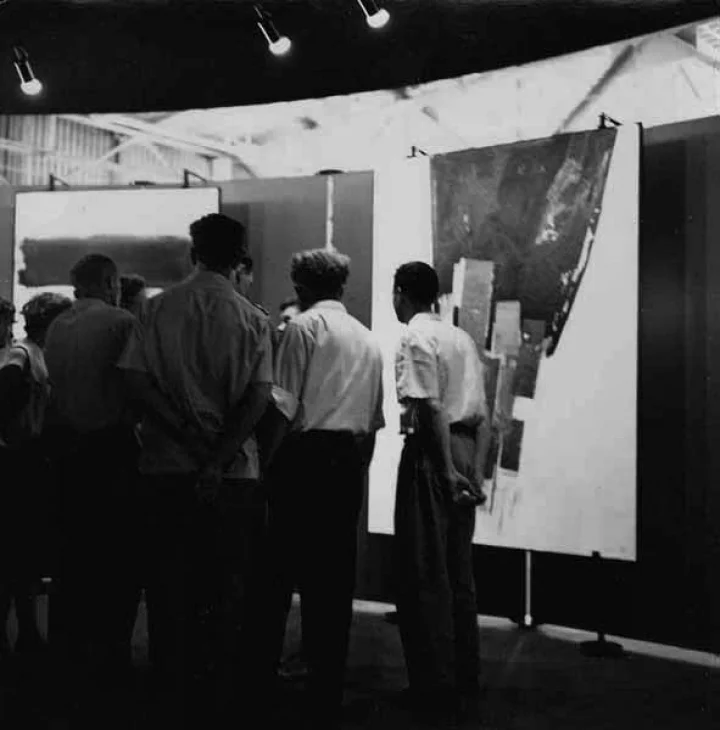
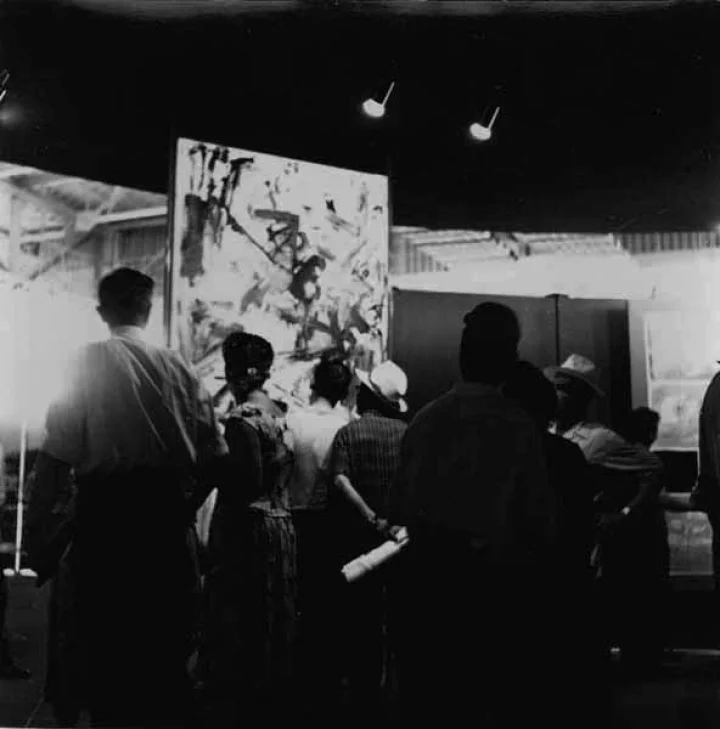
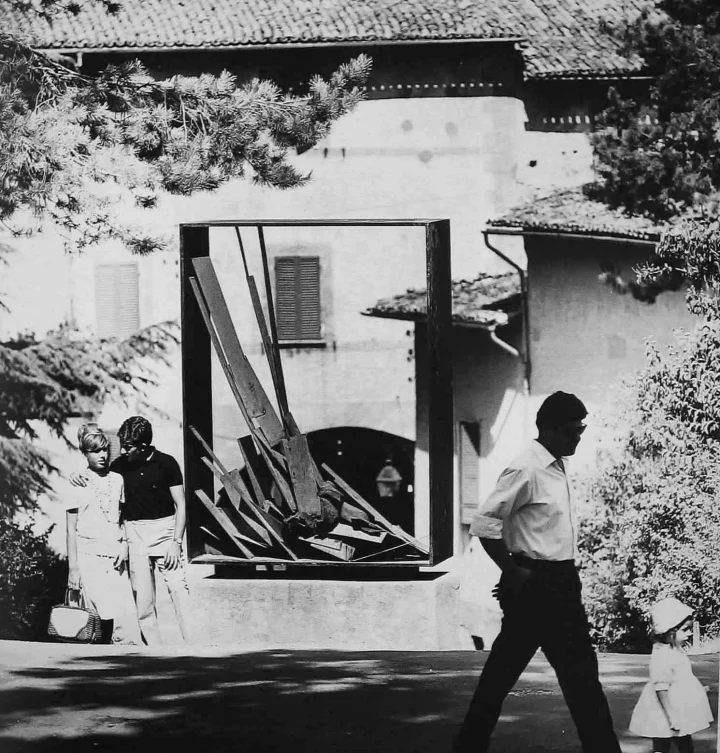
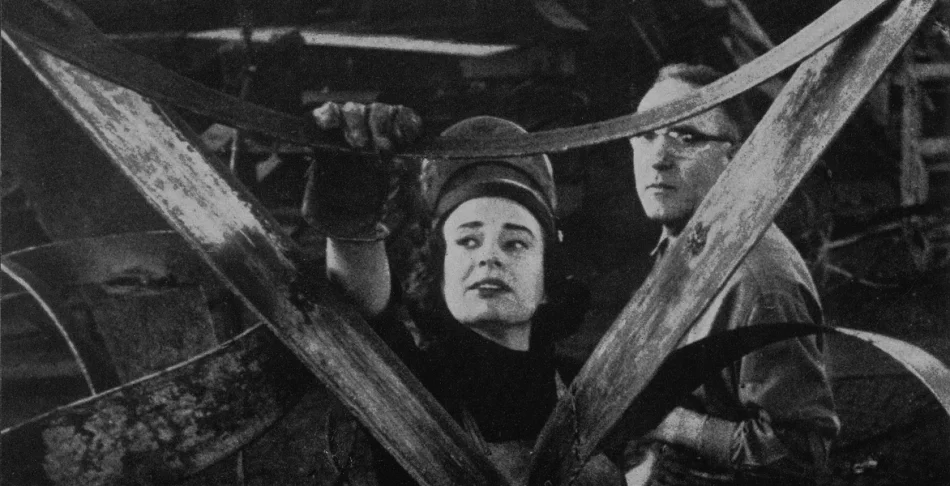
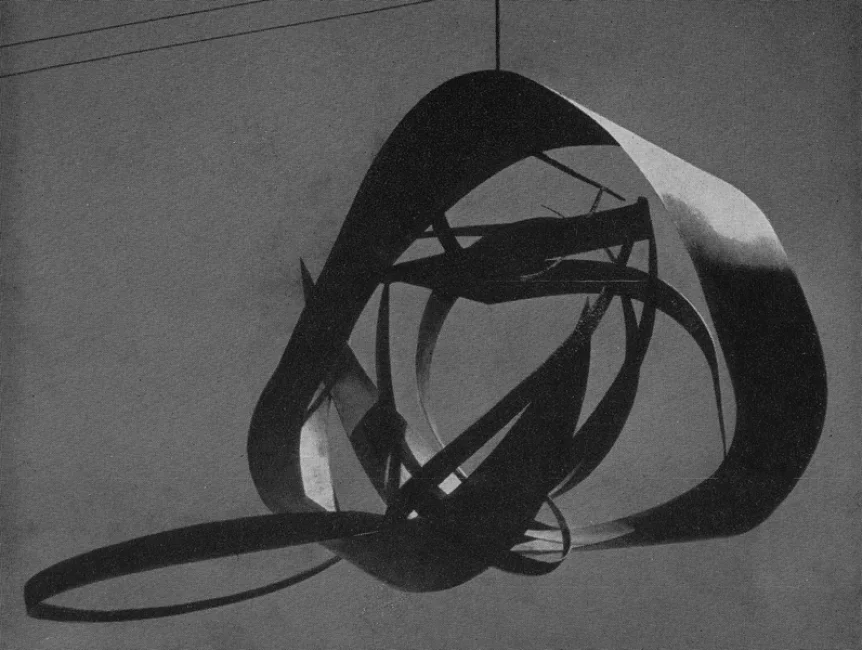
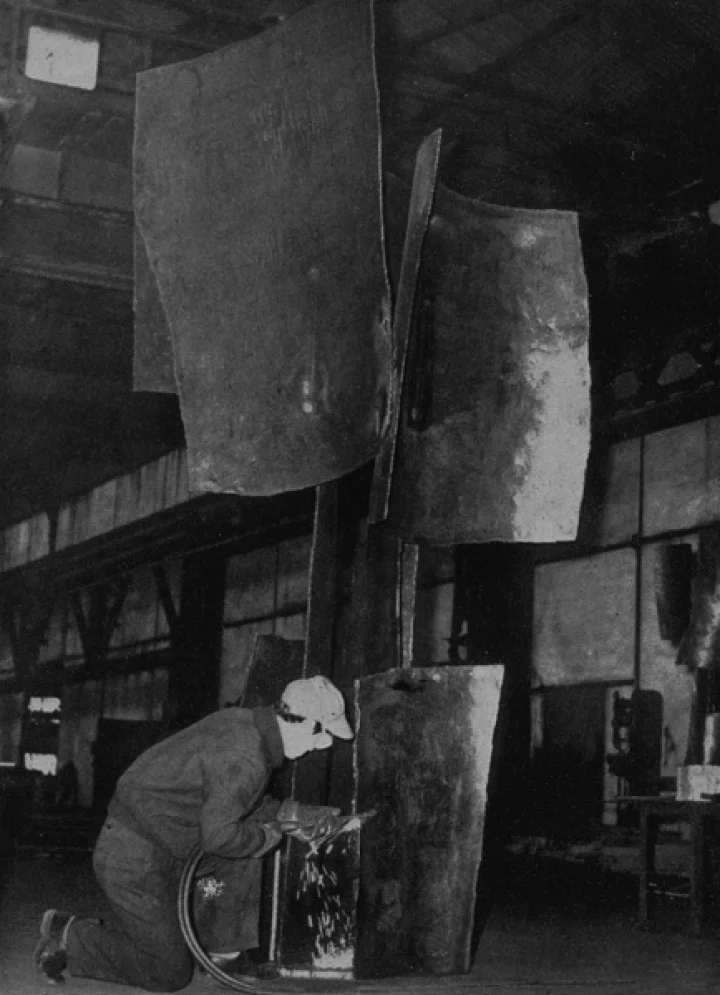
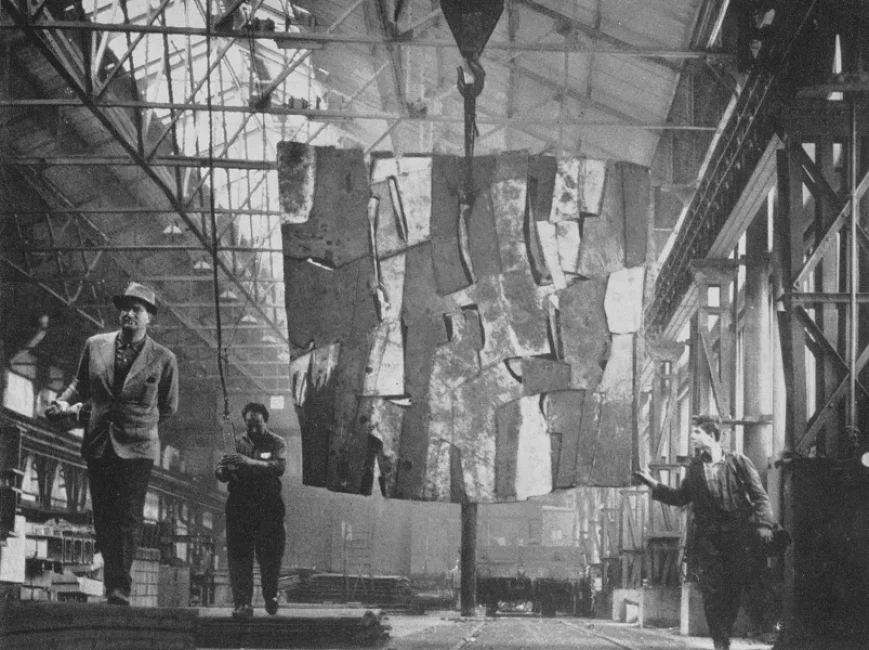
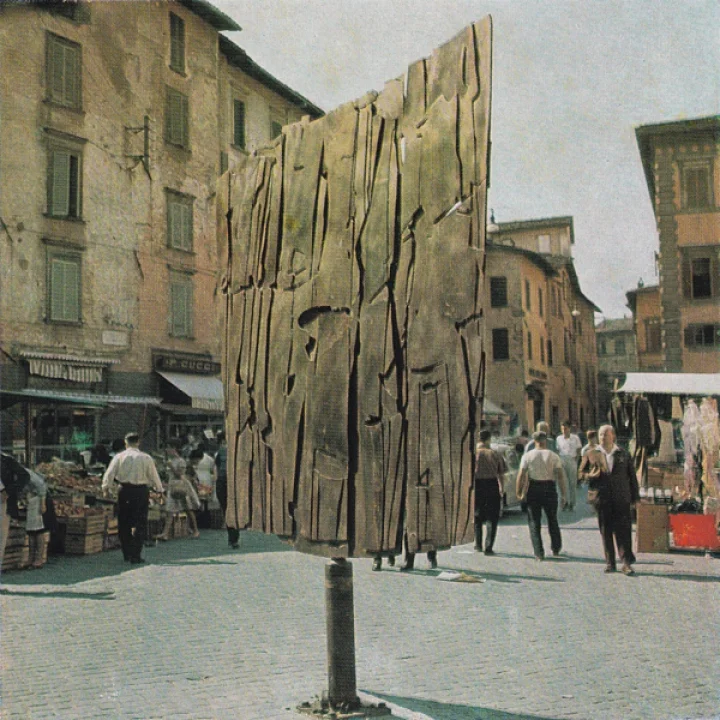
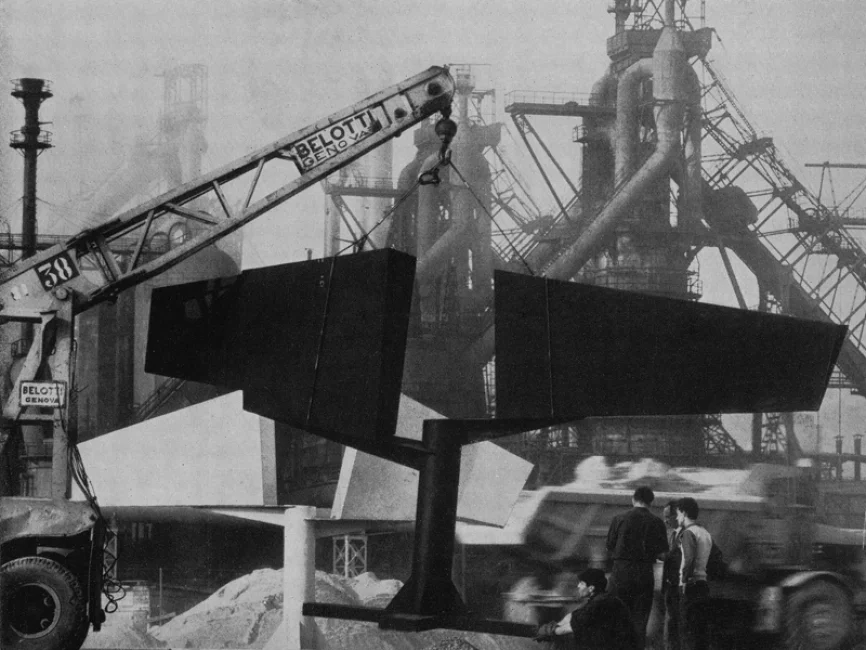
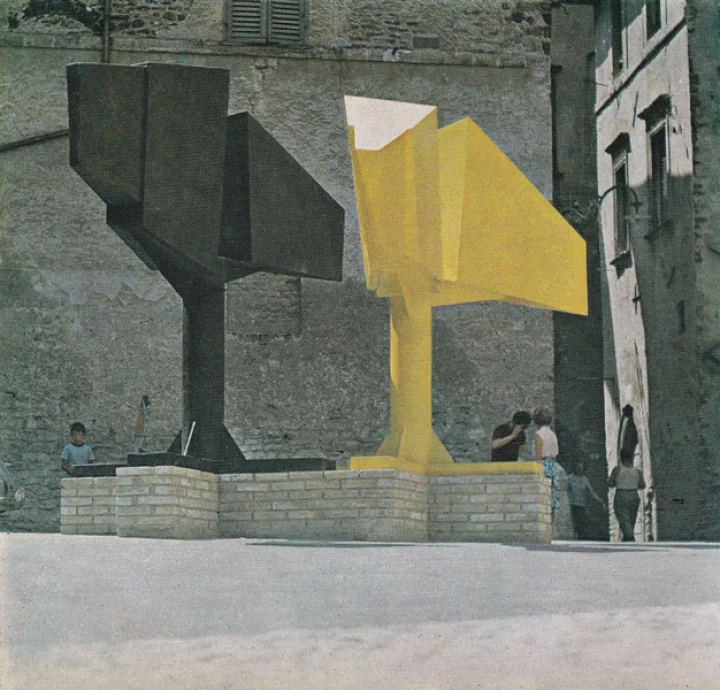
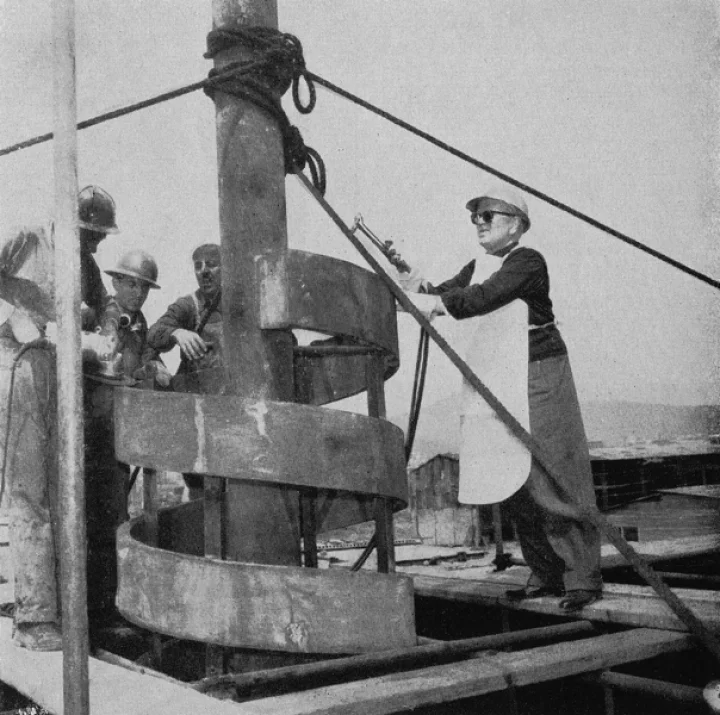
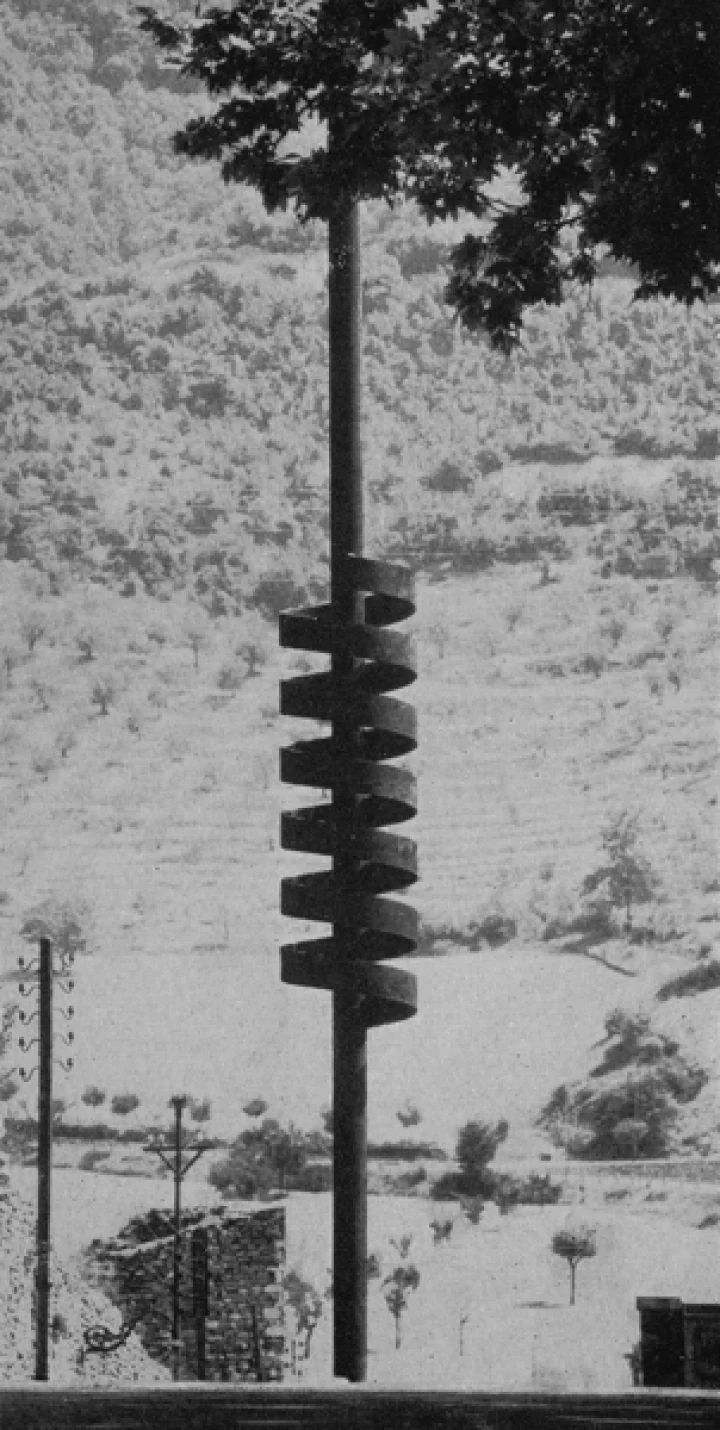
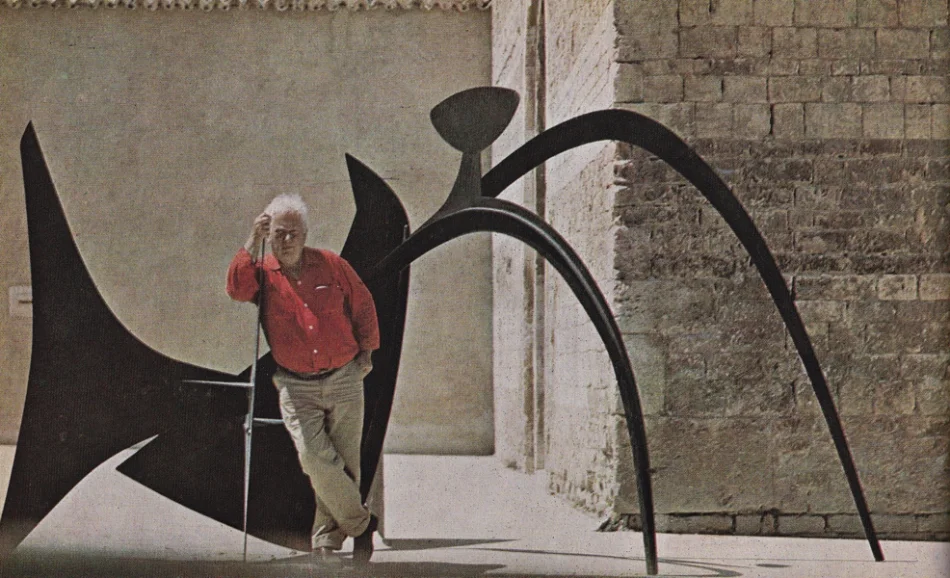
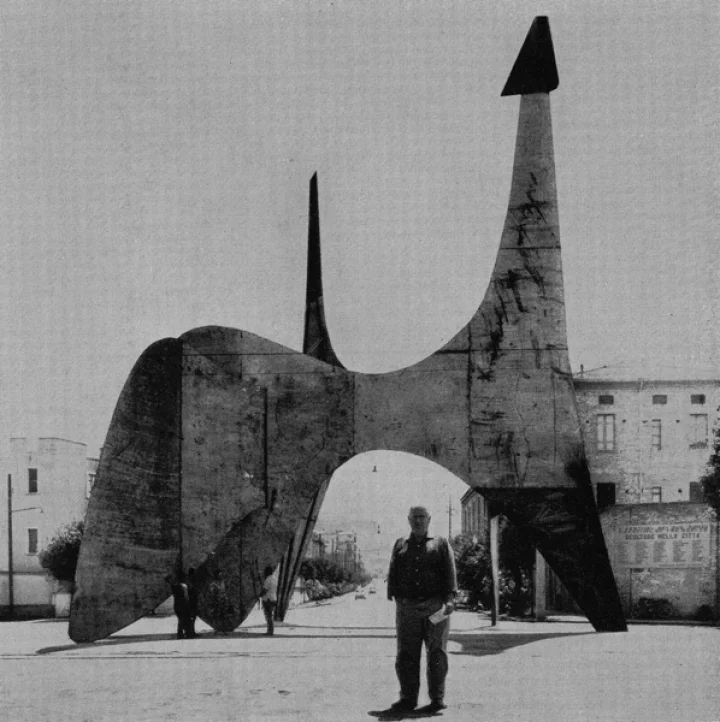
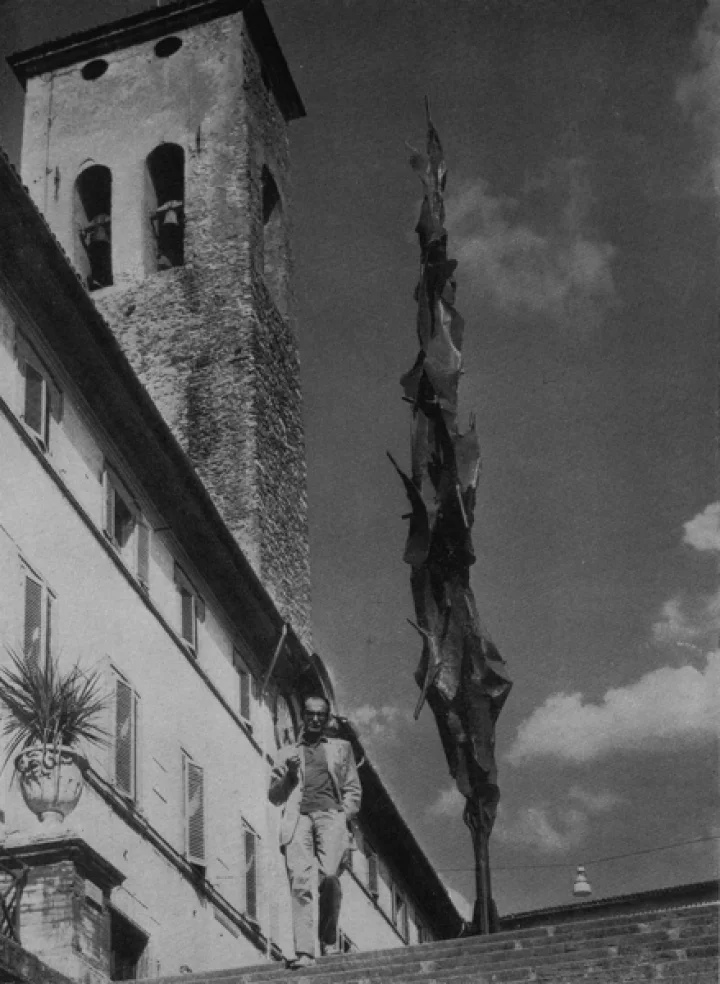
When the Cornigliano steelworks merged with Italsider everything became bigger in scale, not only from the productive and economic points of view, but also — and this was what most interested Carmi, Fedeli and Osti — with regard to cultural promotion. With the new national dimension, there were more opportunities for public events, publications and exhibitions and, in fact, this was a period in which Italsider supported high-profile cultural activities, establishing itself as an experimental, anti-academic organization. Eugenio Carmi played both a centripetal and a centrifugal role with regard to industry: through his creative impulse, art entered the factory and, at the same time, the artist became a driving force on the Italian and international art scenes. As in the case of the Galleria del Deposito in Boccadasse, Carmi became a catalyst for talent. In 1962, on the occasion of the exhibition of Italian industry in Moscow, Carmi, with the support of Gianlupo Osti and the collaboration of the Galleria del Naviglio in Milan, arranged the participation of Italsider with a pavilion that offered, together with a room providing information about the company’s products, a show of contemporary Italian art. Defying the orthodoxy of Socialist Realism — there were, in fact, perplexed and polemical reactions on the part of the authorities in Moscow — he invited a series of artists (Ugo Attardi, Edmondo Bacci, Domenico Cantatore, Giuseppe Capogrossi, Giancarlo Cazzaniga, Guido Chiti, Flavio Costantini, Franco Gentilini, Achille Perilli, Giacomo Porzano, Emilio Scanavino, Libero Verzetti, Renzo Vespignani and Emilio Vedova) to participate, together with him, with a large-format work inspired by the world of work, which, in some cases, he specially commissioned on behalf of the company. The task of designing the exhibition installation was given to Bruno Munari, who created a totally black circular space with atmospheric top lighting. In the summer of the same year, as part of the 5th Festival dei due mondi (Festival of the Two Worlds) in Spoleto, Giovanni Carandente organized an exhibition there entitled ‘Sculture nella città’ (Sculptures in the City), an event that was as controversial as it was acclaimed and attracted the attention of the international press. Fifty artists from all over the world were invited to display their works in the urban space: for a brief period of time, the old palaces and squares became the setting for an open-air museum. The show was given financial and organizational support by Italsider. Originally the company was only expected to make a financial contribution, but Carmi and Fedeli proposed a more direct encounter between the activity of the artists and that of the steelworks, transforming the factory into a workshop of talent: Italsider placed at the disposal of ten of the sculptors selected by Carandente huge spaces in various factories and the collaboration of the workers so they could create large-format steel works that they could never have made in their own studios. David Smith worked in an abandoned factory in Voltri, Carlo Lorenzetti and Pietro Consagra chose Savona, as did Alexander Calder (who only sent a model of the work Teodelapio, which was made by the workers in the factory), Lynn Chadwick and Ettore Colla worked in Bagnoli, Beverly Pepper in Piombino, Arnoldo Pomodoro in Lovere and Nino Franchina in Cornigliano. Eugenio Carmi also participated with the sculpture All’Algeria (To Algeria), concerning which he subsequently recalled on various occasions above all the enthusiastic and constructive involvement of the workers.
Exhibitions