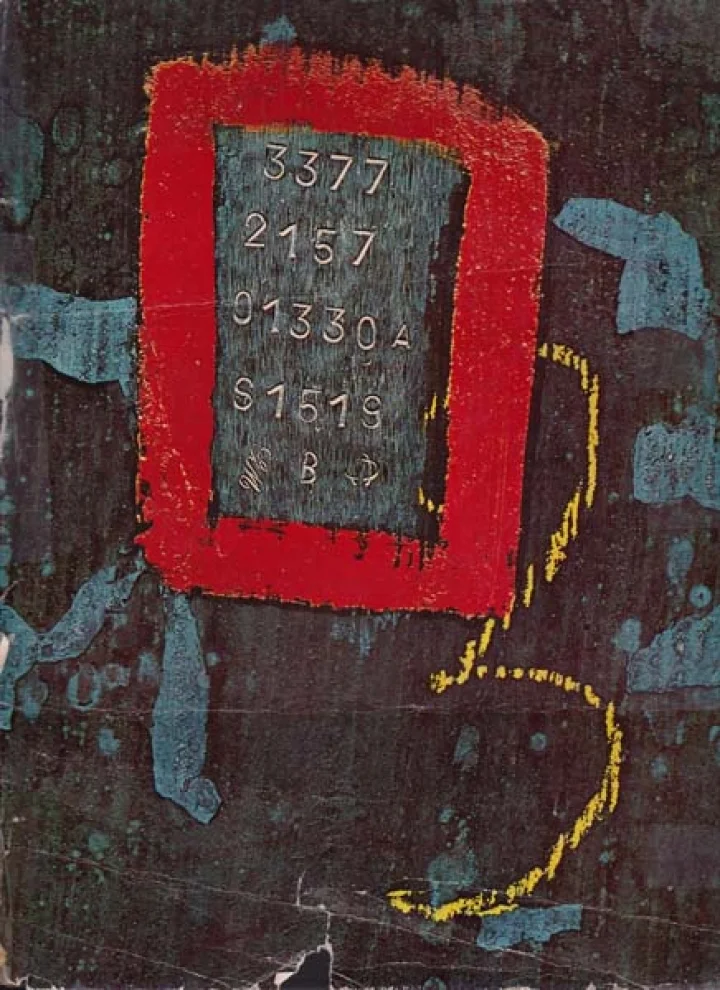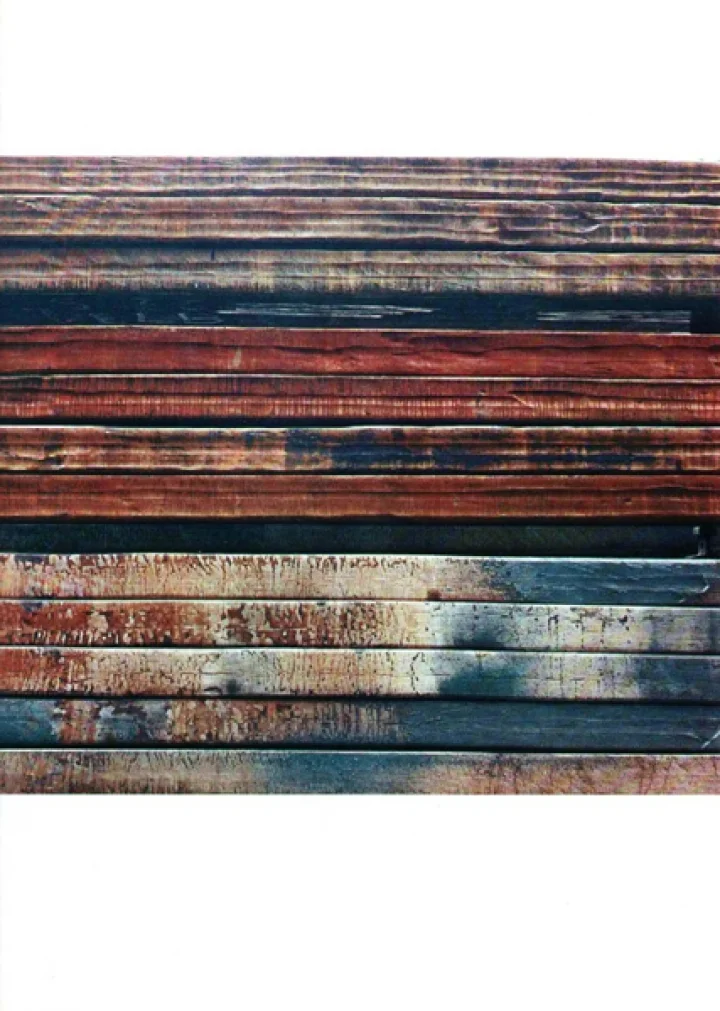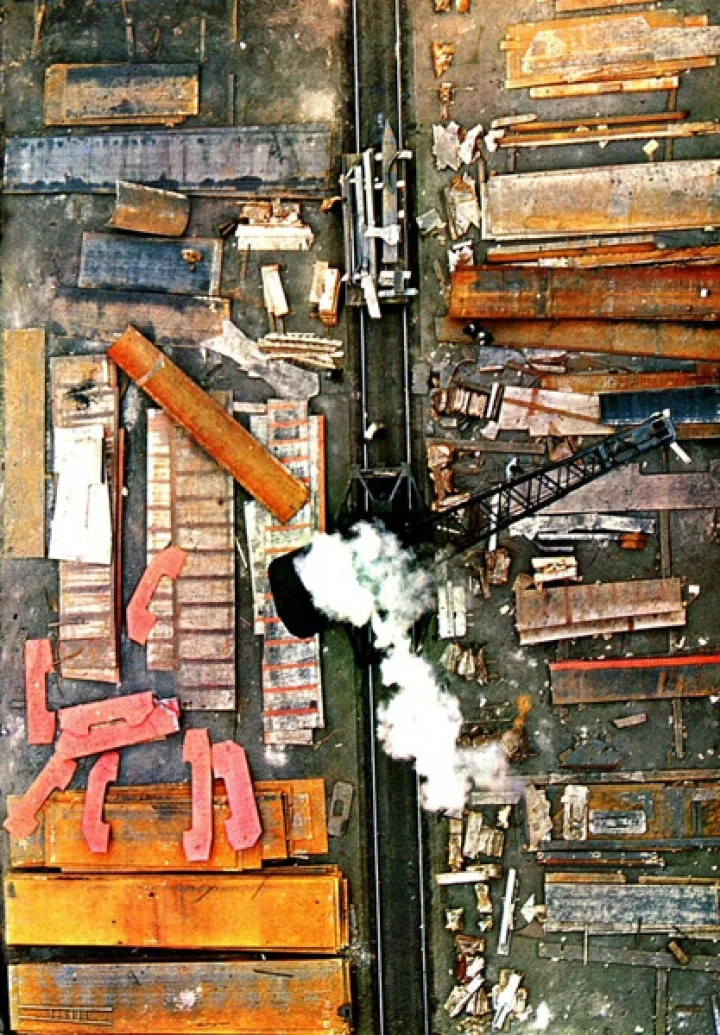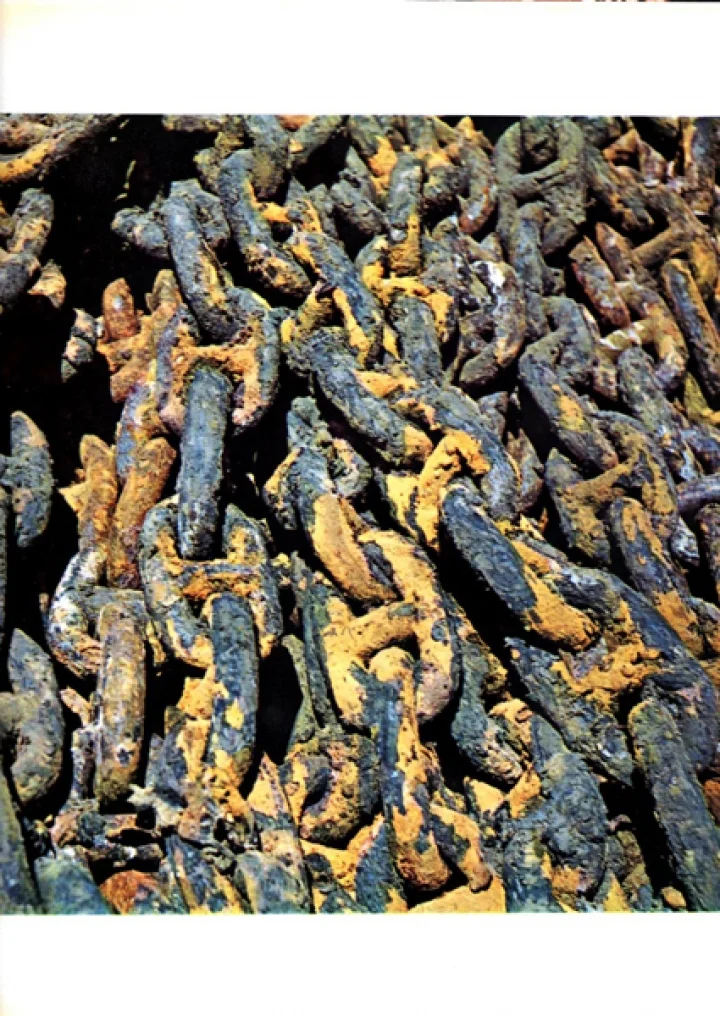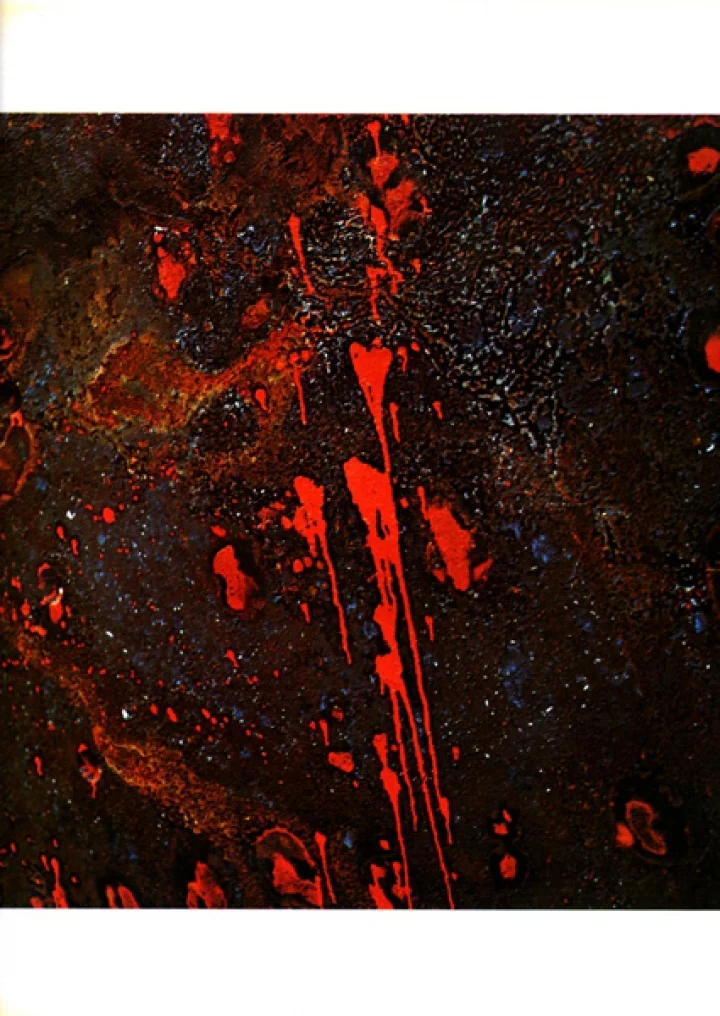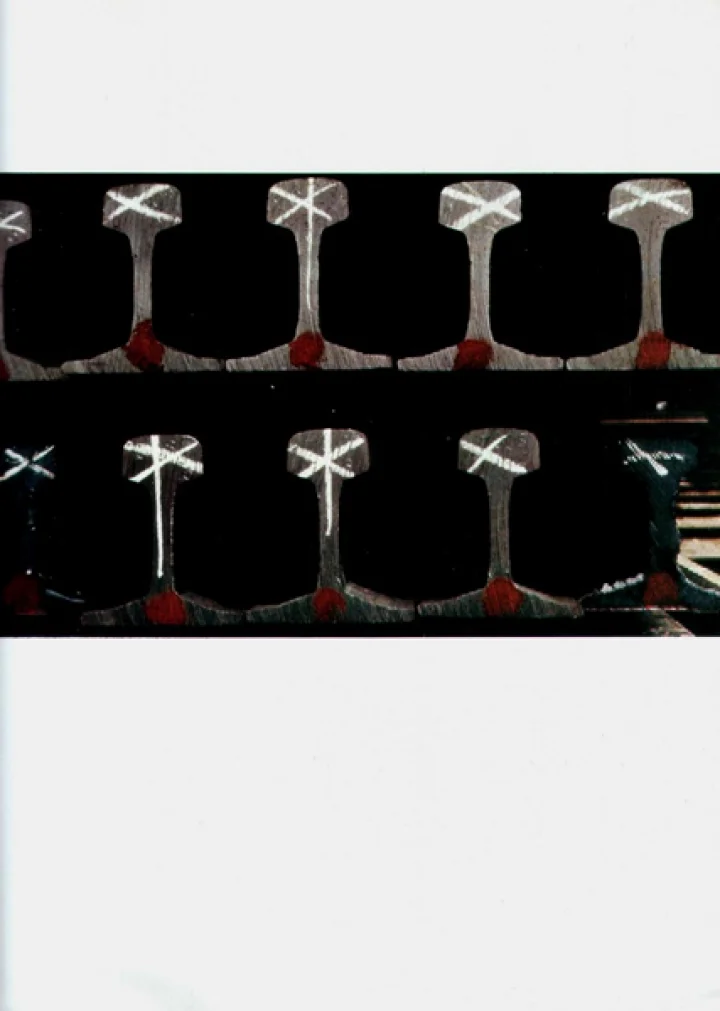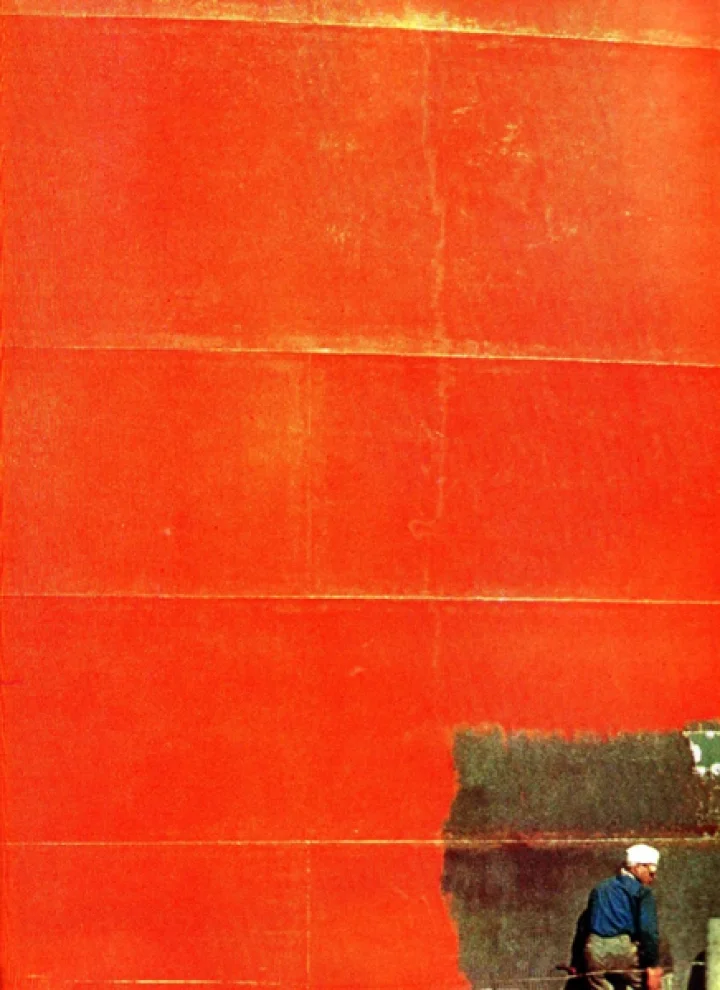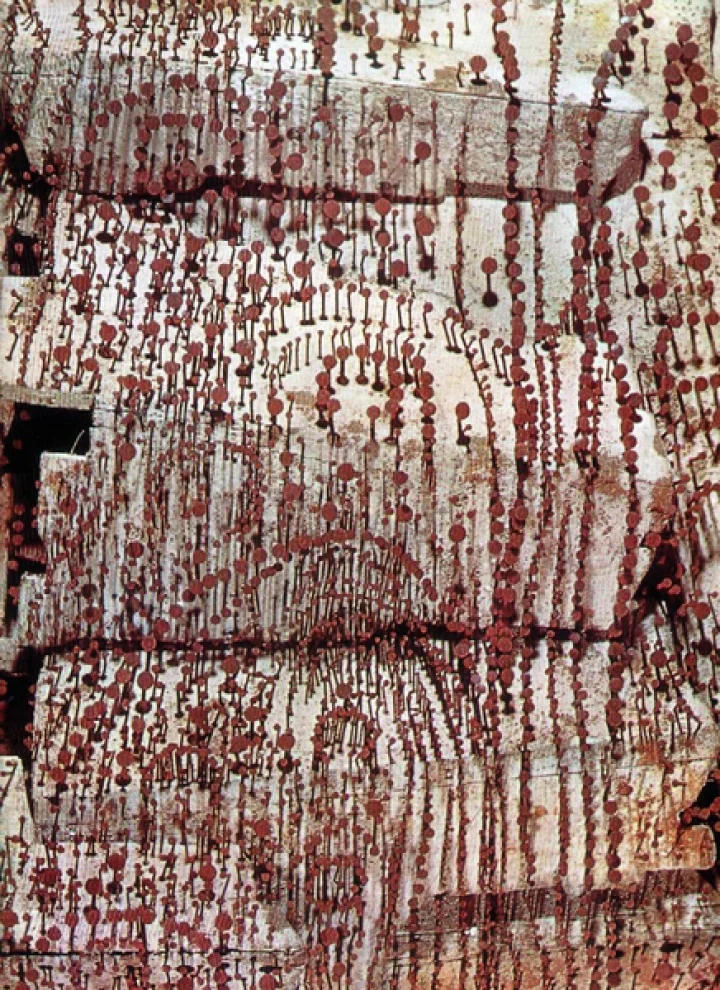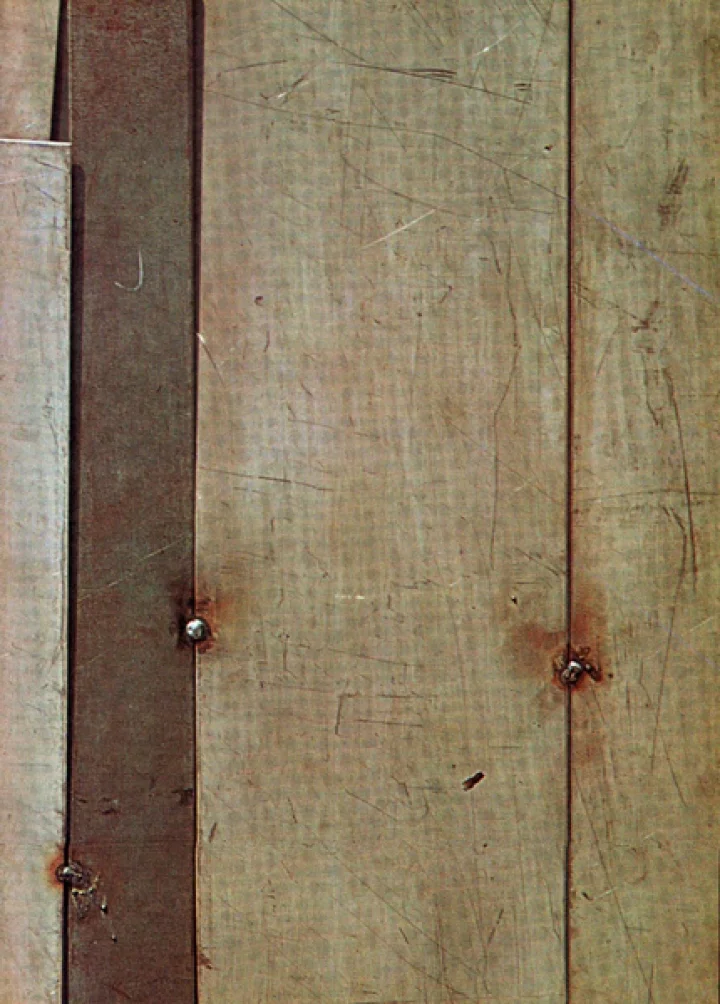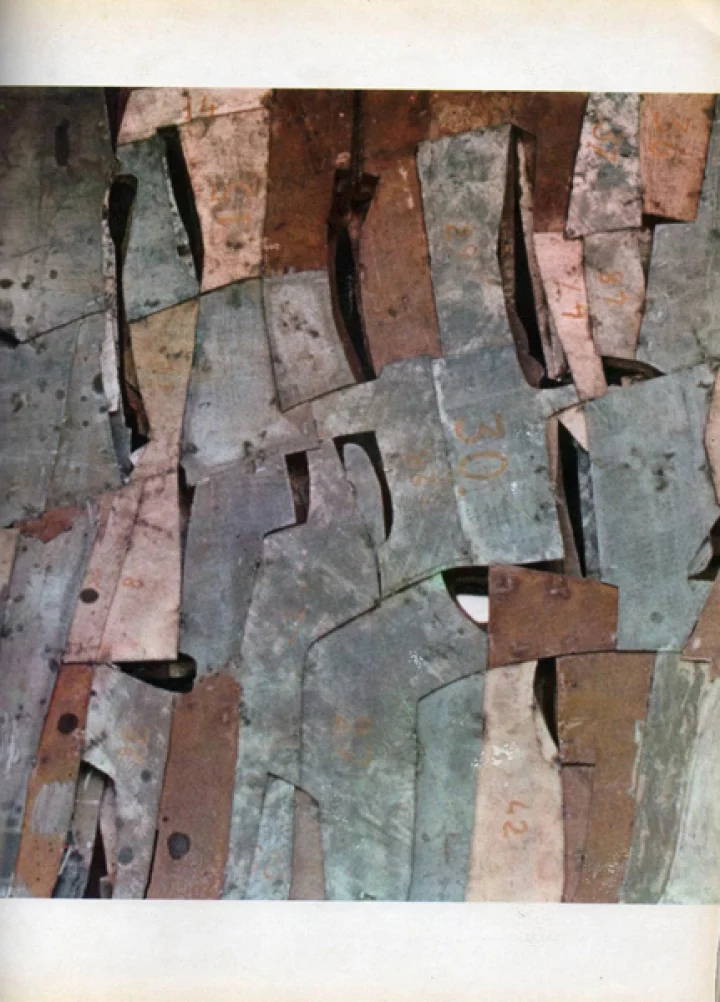
In the course of their publishing activity for industry, Eugenio Carmi and Carlo Fedeli also produced books such as Immagine di una città (Image of a city, 1958) and Immagine di una fabbrica (Image of a factory, 1959). Carmi engaged the Swiss photographer Kurt Blum to illustrate the books, believing him to have the sensitivity necessary for the understanding and interpretation of the threatening yet fascinating essence of industry, over and above its predictable appearance. For the cover of the second elegant photographic book, Carmi once again chose a non-representational design, creating a work that, through the synthesis of red and black and a few abstract signs immediately evoked impressions of a steelworks. This was the period of his enamel paintings on steel, which he started to produce in 1958 and 1959. In 1963 Eugenio Carmi conceived a publishing programme that, in line with the cultural policy of the Rivista Italsider, once again constituted the abolition of the boundary between the iron and steel industry and the world of contemporary art. The book I colori del ferro (The colours of iron) was published by Italsider as a Christmas gift. Carmi added to — and alternated with — a series of pictures by important photographers, such as Kurt Blum, Paolo Monti, Ugo Mulas, Federico Patellani and Lando Civilini, photographs and technical macro-photographs of materials and industrial views in a new, sophisticated aesthetic and semantic dialogue. An essay by Umberto Eco introduced the book, also stressing the importance of Carmi and Fedeli’s idea of not entrusting the captions to an art critic but rather to an engineer, Gino Papuli, who, with a wealth of interesting details regarding the materials and manufacturing processes, provided another key to their interpretation.
Using an idea of his, Carmi made a documentary film in collaboration with Kurt Blum, who was chiefly responsible for it. In L’uomo il fuoco il ferro (Man fire iron) (watch the video), Blum — through his direction and editing, clearly inspired by the Russian cinema of the 1920s and French Symbolism — created a monstrous, inhuman image of the steelworks, albeit an aesthetically moving one. The workers appear to be faceless walk-ons threatened by flows of molten steel and huge machinery in motion with which they have to interact every day. Prokofiev’s ‘Diabolic Suggestions’ stress the dramatic force of the images. In this case, too, reality is represented in its abstract forms. The film won first prize in the documentary section of the Venice Film Festival of 1960.